
Since the beginning of organised warfare, soldiers’ personal equipment has included body armor. The earliest evidence of armor is from the third millennium BC, although there is evidence of offensive weapons dating from the eighth millennium BC (Hackett, 1989), so the history of armor is likely to be comparable. The tremendous knowledge gathered over thousands of years led to a range of highly effective armor systems, even though the development process was virtually entirely empirical. New advancements such as high-strength synthetic materials have built on this to create systems that protect wearers from bullets, shell fragments, and knives. Body armor is now a necessary element of everyday wear for both military and police personnel as a result of these improvements.
One of the most prevalent pieces of safety equipment used by cops is body armor.
A few hundred police officers are assaulted each year. A lot of people’s lives are saved by wearing body armor. Body armor also provides additional protection for police personnel in the event of car accidents or other types of assaults.
The majority of Police body armor and helmets are designed to protect officers from pistol threats. Although police helmets are not as popular as body armor, the criteria for helmets require that they stop comparable bullets. To defeat rifle shots, law enforcement obtains a limited supply of body armor with breastplates.
It encourages the use of personal body armor by documenting the armor’s effectiveness to reduce mortality and disability.
It recognizes individuals who have survived a life-threatening situation as a result of wearing personal body armor.
It also serves the law enforcement community by gathering and disseminating critical information about these survivor incidents.
Hard body armor and soft body armor are the two types of modern body armor. Metal or ceramic plates are used to make hard body armor. The majority of soft body armor is made up of layers of fabric made of high-performance fibers.
Soft body armor is mostly employed by soldiers on the battlefield in conjunction with hard body armor to provide adequate ballistic protection, or by law enforcement officials who are more likely to confront lesser levels of ballistic hazard.
The UK’s police dogs are outfitted with a lightweight custom-made armor that is designed to protect them. This is available for both general purpose and drug dogs.
The Police Service employs a diverse group of officers who serve in a variety of capacities. Each has its own set of responsibilities. Stabbing proof vests are the most basic protection equipment necessary for many police officers. This isn’t because they are widely being used, but because they are the most widely available weapon.
A bulletproof vest is made up of a panel. It is a vest-shaped sheet of modern plastics polymers made up of numerous layers of Kevlar, Spectra Shield, or Twaron (similar to Kevlar) or Dynema in other nations. The woven Kevlar layers are neatly stitched together using Kevlar thread, whereas the nonwoven Spectra Shield is coated and bonded with Kraton resins.
The panel here offers protection but not much in the way of comfort. It is enclosed in a fabric shell, which is often constructed of a polyester or cotton blend or nylon. Sewing a sheet of absorbent material, such as Kumax, on the side of the shell facing the body makes it even more comfortable. The Nylon padding can be included in a bulletproof vest for further protection. Built-in pouches are also included in bulletproof vests designed to be used in particularly risky conditions.
Hard body armor and soft body armor are the two types of modern body armor. Metal and ceramic plates are used to make hard body armor.
Most of the soft body armor is made up of layers of fabric made of high-performance fibers. Soft body armor is mostly employed by soldiers on the battlefield over the hard body armor to provide adequate ballistic protection, or by law enforcement officials as they are more likely to confront lesser levels of ballistic hazard.
Bullets fired from handguns or rifles, and pieces from artillery shells or bomb blasts, are called as ballistic hazards. Bullets can be easily formed of a variety of materials and shapes, depending on the end-use application.
Bullets that are made of pure lead with a hemispherical head are highly prone to bend but have fewer penetrating capabilities. This causes the most harm to the human torso. The ones having a metal covering and ogival head proved to have less deformation during an impact occurrence. This even resulted in less blunt tissue trauma.
Deformation and penetration of fragments are highly influenced by the shape and impact velocity of the pieces, both of which are difficult to forecast. To avoid distortion during a ballistic shooting test, penetrators are usually composed of hardened steel. The impact velocity can be changed to suit the needs of the test.
To design protective and lightweight body armor, it is necessary to understand ballistic risks. There are a number of conditions that should be met by the materials used in police body armor design:
Materials should be really strong enough to give adequate ballistic protection to wearers.
Lightweight and low-bulk materials are necessary, this comes with the goal of not impeding the wearer’s mobility and efficiency.
Materials used should be long-lasting, ensuring that body armor’s performance does not deteriorate under adverse conditions such as moisture or UV light.
To give enough comfort, the materials should be super flexible.
The Body armor is divided into five categories: Level IIA, Level II, Level IIIA, Level III, and Level IV.
This has been established by the National Institute of Justice (NIJ). The National Institute of Justice (NIJ) is responsible for creating and defining designations. Type IIA bullets were tested in 9 mm Full Metal Jacketed Round Nose (FMJ RN) and.40 S&W Full Metal Jacket (FMJ) calibers.
Level II: Type II bullets are tested in 9 mm FMJ RN and.357 Magnum Jacketed Soft Point (JSP) calibers.
Level IIIA: Type IIIA rounds are tested in.357 SIG FMJ Flat Nose (FN) and.44 Magnum Semi Jacketed Hollow Point (SJHP) calibers.
Level III: Hard armor or plate inserts tested with 7.62 mm FMJ steel jacketed bullets in Type III (Rifles).
Level IV: Hard armor or plate inserts were tested with.30 caliber armor piercing (AP) bullets in Type IV (Armor Piercing Rifle).
‘soft’ vest that protects against fragmentation and ‘hard’ plates that defend against armor-piercing gunfire. To shield a body part from impact, the protective layer should be immediately over it at the time of impact. To put it in a simpler way, well-fitting armor is snug and secured against the body at all times. The most effective way for body armor to work is for it to be specifically shaped to the individual’s shape. Even when money was not an issue, making personalized armor for each individual would be impracticable. It would also be impossible to keep up with the natural changes in an individual’s body structure over time, as well as personnel turnover. Only a few such as two to five sizes of body armor are available to accommodate a wide range of torso shapes and sizes. This is primarily because of the high cost of ballistic materials and the production process. Also, the number of sizes was chosen to provide more economical protection rather than the optimum protection.
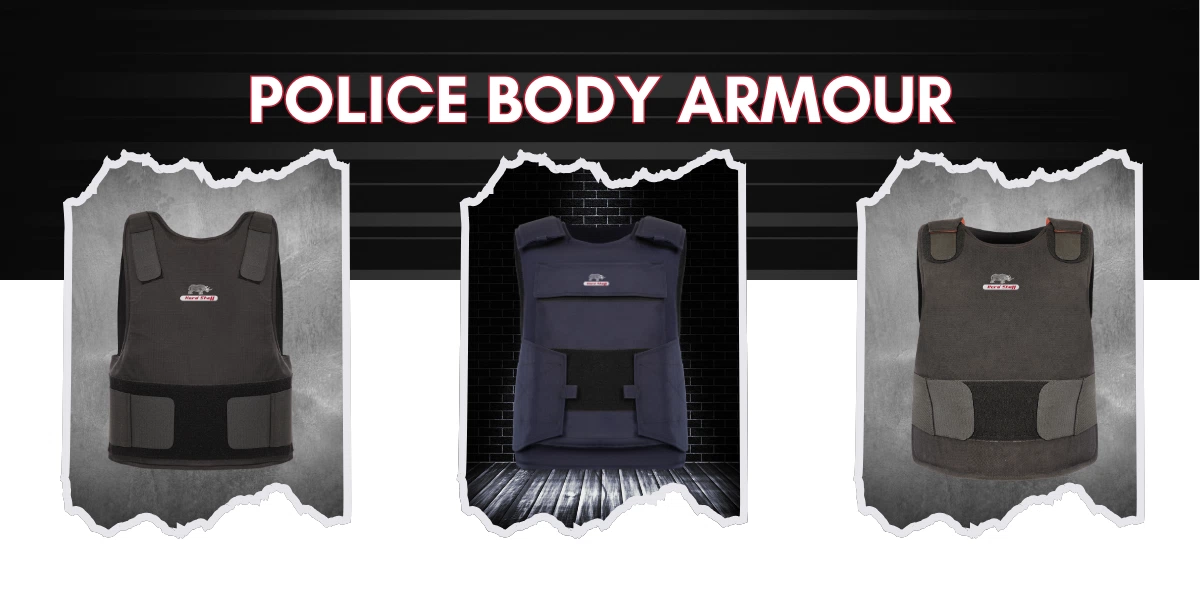
Just like the medieval steel breastplates, early plate designs emphasized protection over mobility. It aimed at covering the full front and much of the sides of the body as feasible.Body armor now consists of simple rectangles aligned longitudinally with a concave inner surface, and modern plate designs prioritize mobility over protection. The rigid plates were supposed to protect crucial organs while also allowing for the shoulder and arm motion. Sizing and fit must rely on adjustability characteristics when there are so few sizes. The present soft armor vest is designed with limited torso circumference and strap length adjustment. As the hard body armor plates are frequently installed inside the soft armor vest fabric pocket, it may or may not cover all important organs. It also depends on the wearer’s body size and how the strap length has been adjusted. Body armor for law enforcement Police officers has gone through multiple advancements over the decades. While these have made the latest armor significantly lighter, more reliable and stronger, it should be noted that bulletproof armor is typically rated up to certain protection levels and may not stop all types of ammunition. There are now overt and covert types of body armor and are selected according to the situations and protection levels the officers are placed in.
Metals were the most commonly used in Police body armor material in earlier versions, but was quite heavy, although being effective. As the maneuverability and speed of law enforcement personnel also matter a lot in their roles, metals were slowly replaced by new-age materials such as composites. One such high-performance material is called Aramid, which when woven into a fabric form, becomes bulletproof. Another material is called Ultra High Molecular Weight Poly Ethylene, commonly abbreviated as UHMWPE.
Law enforcement officers use different types of Body armor according to their roles in the force. Patrol officers prefer bulletproof armor while those on prison duty prefer spike & stab-proof armor. Although these types of armor are built to be tough, the specific variant should be selected based on the perceived threat during its application.
According to the threat levels in different situation, the protection levels offered by body armor also varies. Protection levels vary from Level II, Level IIIa, Level III and up to Level IV. Level II and IIIa provides defense against commonly used ammunition such as 9mm upto .44 Magnum, while Level IV protects against larger rounds such as those used in Sniper rifles.
Level IIIa is the most common type of body armor for regular law enforcement officers, while Level IV is only used in Special Forces such as SWAT teams.
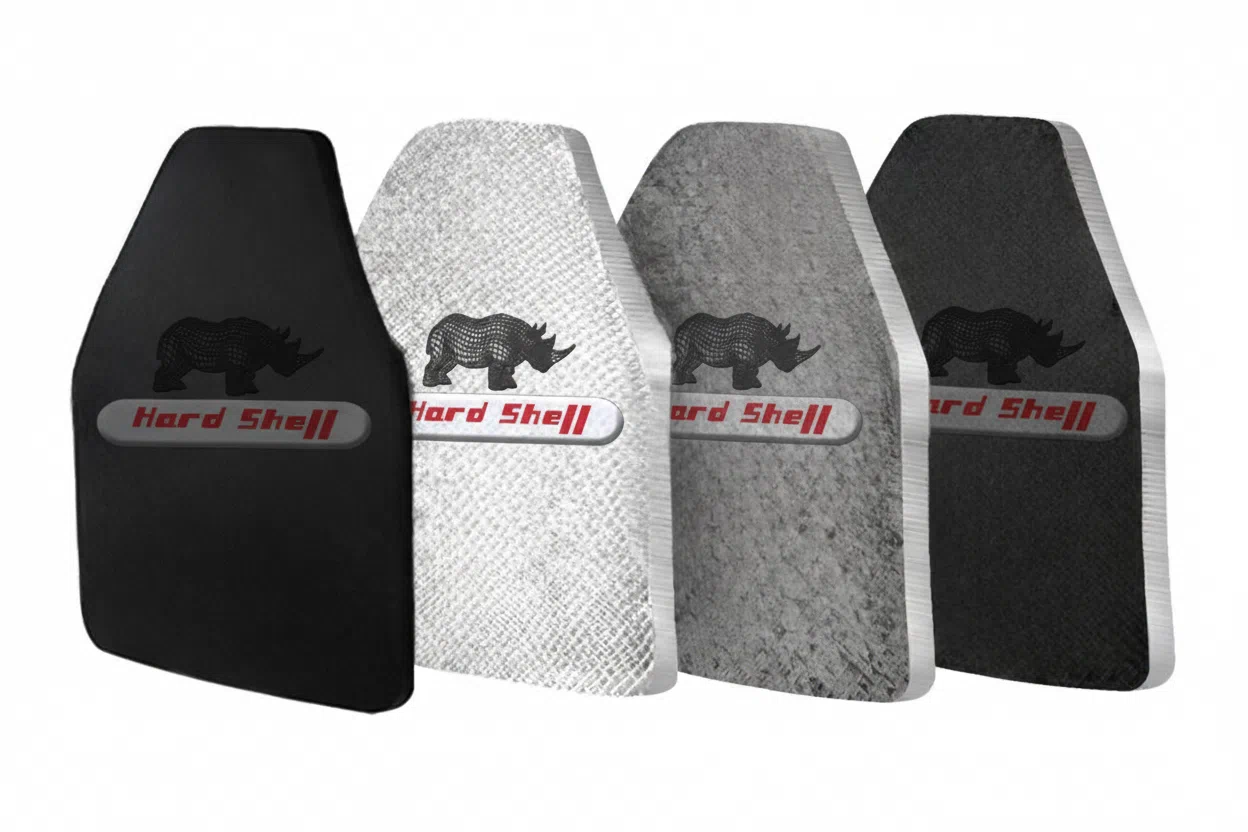
Generally, all body armor manufacturers specify guidelines on maintenance of their products. Some of the basic points include, but are not limited to:
Carrier vests alone can be machine washed, once the armor plates are removed
Keep the armor plate away from direct UV radiation
The armor panels themselves can be wiped with a wet cloth or sponge, and should not be immersed in water